The letter arrived handwritten on lined notebook paper — the kind with three holes punched along the side and a red margin that you might have used for a high school composition assignment once upon a time. The return address was from a correctional facility out east.
We occasionally receive mail from Native American inmates. Usually, the writer tells us his life's story or about his faith journey. But this man was asking for advice on a question that cut deep.
"I am registered as an American Indian, but my religion is listed as Lutheran. If I want to participate in the Native American activities or classes, I have to change my religion. But if I change my religion, I can't participate in the Sunday worship or Bible study."
"How can I be Lutheran and Native?"
— John, Seminole tribe · Correctional FacilityJohn closed with a question that has echoed across Native communities for generations. And he asked it from a prison cell — where, stripped of nearly everything else, he was still being told to choose between who he was and who God made him to be.
A 500-Year-Old Lie
Sadly, John's question is one we are asked often in ministry among Native people. For more than 500 years, Native Americans were told they cannot be both Christian and Native. The Native culture, according to early missionaries, did not fit the Christian religion — and belief in the Gospel required them to give up who they were in order to become something they could never truly be.
It wasn't just theology. It was policy. It was enforced. Boarding schools — funded by the federal government and operated by churches — removed Native children from their families, cut their hair, banned their languages, and punished them for singing their songs or speaking their names. The logic was explicit.
"A great general has said that the only good Indian is a dead one... In a sense, I agree with the sentiment, but only in this: that all the Indian there is in the race should be dead. Kill the Indian in him, and save the man."— Capt. Richard H. Pratt, Founder of Carlisle Indian School
Only once the Indian part of a man had been purged, the thinking went, could the saving grace of Jesus' death and resurrection become available to him. Culture was the barrier. Tradition was the enemy. Identity was the price of admission.
This is a lie — a theological error with devastating real-world consequences. And it is still alive. It has been so thoroughly embedded in some Native communities that it is treated as obvious truth: if you follow Jesus, you leave your people behind.
What the Gospel Actually Says
Lutheran Indian Ministries, through your prayers and gifts, works every day to proclaim the truth that dispels this aged, false teaching. The Gospel of Jesus Christ does not demand cultural death as the price of salvation. It never has. What early missionaries called "pagan culture" — the drum, the dance, the language, the land — was not the enemy of the Gospel. It was the vessel through which God could speak to Native hearts in Native ways.
"God speaks to Native hearts in Native ways. You do not have to stop being who you are to receive what He offers."
The Gospel has always crossed cultures by entering them — not erasing them. Paul became "all things to all people" not to erase their humanity, but to reach them within it. The Spirit at Pentecost did not force every listener to hear in one language. Every person heard in their own tongue. The miracle was not uniformity. It was recognition.
The Man With the Drum
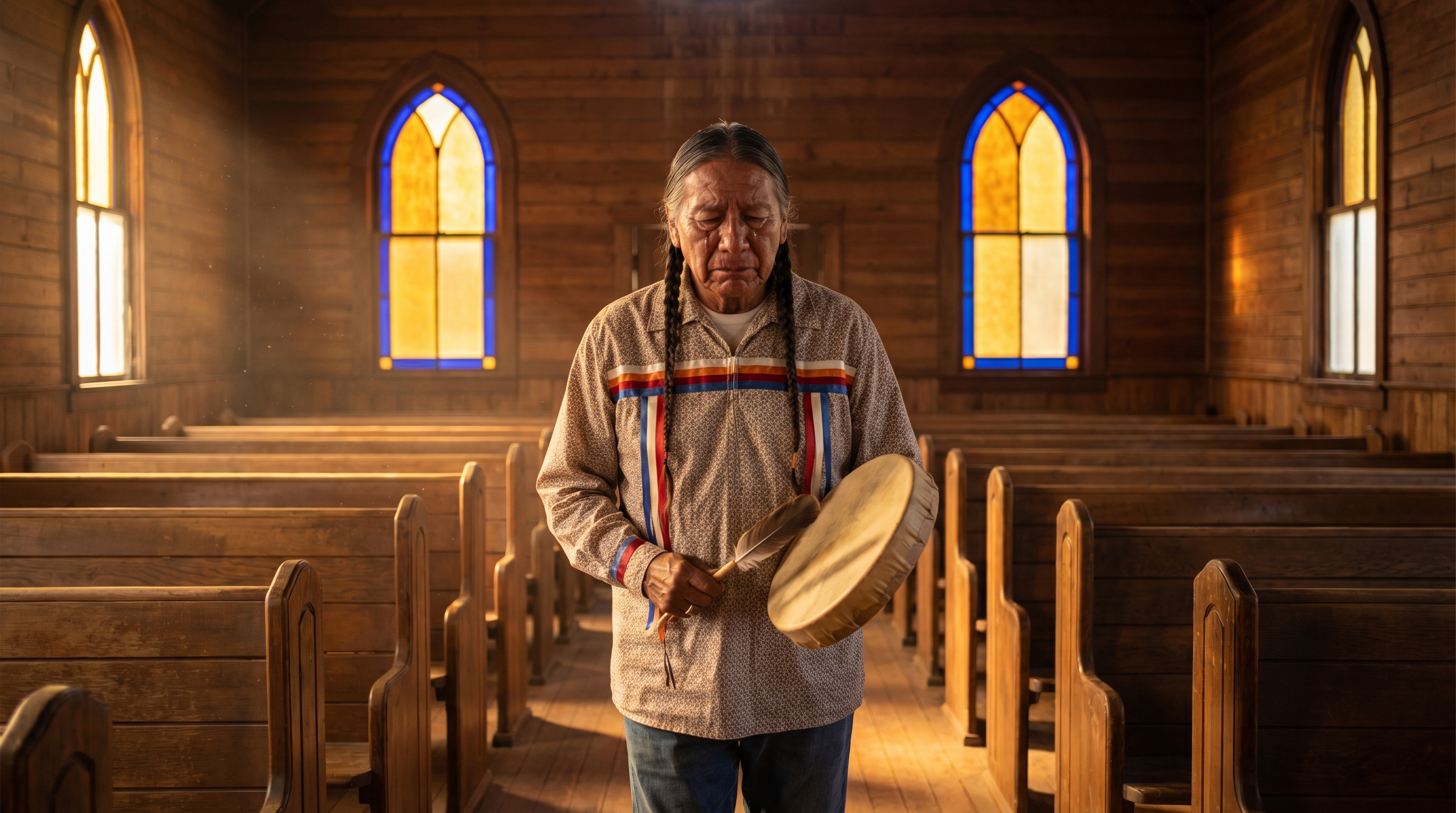
For the first time in his life, he felt free.
A friend of LIM was asked recently to take part in a Lutheran church service. He agreed — but standing backstage, drum in hand, waiting to process into the sanctuary, the old question rose in him: How can I be Native and Christian? How will this congregation react to our drumming and regalia? How can I be one of them and still be me?
He had been invited, with a group of local Native people, to share their faith and their stories — their drumming and their culture. And yet, he felt anxious. Decades of being told to choose had left a wound that didn't close easily.
The pastor made the announcement. The drumbeat echoed through the sanctuary.
In a solemn, humble, and worshipful movement, they entered — honoring and praising their Savior, Jesus Christ, in the way they were taught by their ancestors. They honored the traditions of their people while worshipping their Holy Father from their innermost being, with all their heart and all their mind and all their soul.
"As he walked down the aisle, tears streamed down his face. The Holy Spirit guided him on and his heart softened. For the first time in his life, he felt free."
Free to be Native and to be Christian. Free to praise God with drumming and dancing. Free to be who God had created him to be. At that moment, he knew and understood that Jesus Christ suffered, died, and was resurrected for his salvation — and he gave thanks to God.
"Let them praise his name with dancing and make music to him with timbrel and harp. For the Lord takes delight in his people; he crowns the humble with salvation."
It is in these moments we can all rejoice and thank God that He sent His Son, Jesus, for the salvation of all people. Not all people who look a certain way. Not all people who conform to a certain culture. All. The drum was always welcome in the house of the Lord. It just took the courage of one man, and the prayers of a whole community, to prove it.
John's Answer
This is the message we returned to John — and the message we share daily with the Native American, Alaska Native, and Native Hawaiian people we encounter in this ministry:
"I know God is with me, and I worship Him where I am. You and LIM are in my prayers. Continue to do God's work and spread His word to all Nations!"
— John, Seminole tribeFrom a prison cell, with almost nothing — John had already found the answer. He was worshipping. He was praying for others. He was trusting God to hold both parts of his identity together. The system around him had not caught up to the Gospel. But John had.
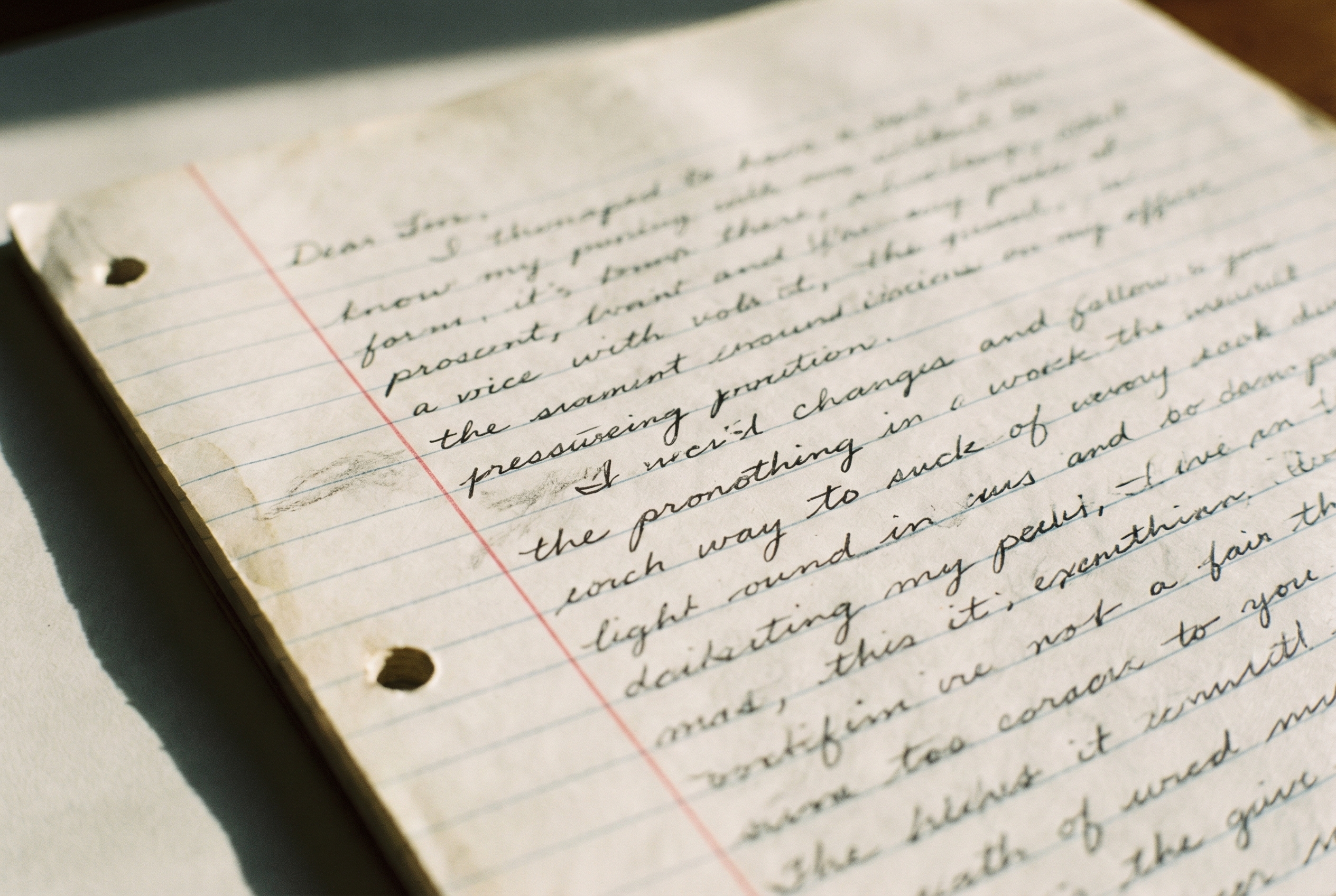
The letter arrived handwritten on lined notebook paper with three holes punched along the side.
Your gift enables us to proclaim the truth Native people need to hear: Jesus died for YOU just as you are. Not as someone else. Not after you've erased your culture, your language, your traditions. Just as you are — Native, whole, and beloved by God.
Please prayerfully consider a gift to support God's work among Native peoples.
God's blessings — In Him,
Tim Young Eagle, CFRE (Pawnee) · Executive Director, Lutheran Indian Ministries