
God’s Kindness in the Dead-Still Season
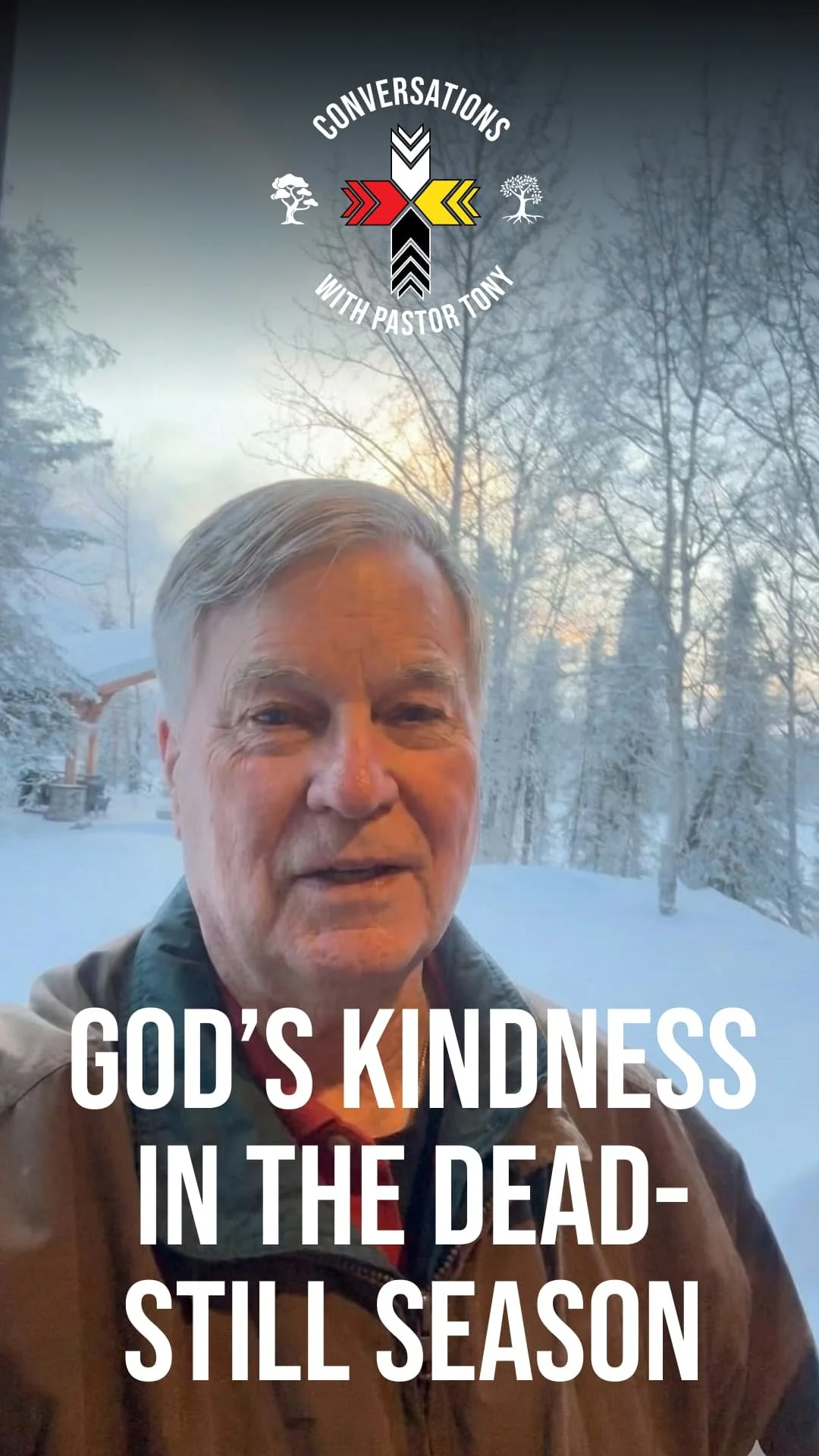
An Alaska winter as a picture of the soul
Speaking from the deep cold and quiet of an Alaska winter, Tony Schultz uses the landscape as a metaphor for what many people experience spiritually: a season where everything feels “dead still,” like life has stopped moving and warmth feels far away. He even jokes that the hibernating bears have the right idea—unlike the Chicago Bears—because when conditions get harsh, it makes sense to retreat, to wait, to wonder what’s happening beneath the surface.
From that setting, he offers pastoral encouragement on behalf of Lutheran Indian Ministries, responding to a heartfelt question that shows up in many forms: When my faith feels cold, have I fallen out of God’s plan?
The core question: “Am I no longer in God’s perfect plan?”
The question isn’t abstract—it’s personal. It often rises when someone notices distance in their prayer life, less desire for Scripture, more shame than hope, or a nagging sense that they’ve disappointed God beyond repair.
Tony frames the question carefully: it assumes God’s plan is fragile, or dependent on our spiritual performance, or something we can accidentally “miss” by making wrong turns. And it assumes that a spiritually numb season means God has withdrawn.
His answer pushes in a different direction.
God’s “perfect plan” starts with relationship, not performance
Tony’s first move is to redefine what “the perfect plan” means. He describes it as God’s desire—and God’s action—to bring us into relationship with Him. That relationship isn’t something we manufacture by effort or moral scorekeeping. God has already made it possible.
To ground that, he points to the Christian claim that salvation is not earned but received:
Through Christ, we are made God’s children.
Faith itself is not a trophy for the spiritually strong—it is God’s gift.
He references 1 Corinthians to speak about being “children of God” by being united with Christ, and Ephesians to emphasize salvation “by grace…through faith,” explicitly rejecting the idea that we can boast in our own spiritual achievement.
The implication is comforting and challenging at the same time: if God is the one who establishes relationship, then the foundation remains even when our feelings wobble.
When life feels spiritually “dead still”
Tony doesn’t deny the experience of spiritual stillness. He names common causes that can freeze the heart:
grief and loss
known failures and regrets
worries about what we’ve done or said
ongoing patterns we’re afraid to face
or even a vague heaviness we can’t explain
Sometimes the numbness comes with a specific fear: “I’ve put off being with God so long that maybe He’s put off being with me.” In other words, the silence starts to feel like rejection.
That’s where Tony introduces a key Scripture that flips the emotional script.
The turning point: God’s kindness leads us back
Tony highlights Romans 2:4: the idea that it is the kindness of God that leads us to repentance—not terror, not self-disgust, not panic, and not the pressure of “fixing ourselves” first.
That matters because many people treat repentance like a punishment: “I have to crawl back.” Tony reframes it as an invitation powered by love: God’s kindness reminds us we still belong, and that belonging becomes the very reason we can turn around.
In this view, repentance isn’t God’s way of saying, “Try harder so I’ll accept you.”
It’s God saying, “You are mine—come back into the warmth.”
Baptism as God’s decision, not ours
A major theme in Tony’s message is baptism—not as a mere human milestone, but as a sign of God’s initiating love.
He acknowledges the different ways people experience baptism:
Some were baptized as adults and remember making a conscious decision.
Others were baptized as infants and may feel like it was their parents’ decision.
Then he makes the central claim: baptism is ultimately God’s decision. God is the one choosing, calling, and claiming.
To explain this, he draws a parallel to circumcision in the Old Testament, where Israel’s infant boys were marked at eight days old—not as proof of the child’s spiritual maturity, but as a sign of covenant belonging. Tony presents baptism in a similar way: it reveals what God is doing—God marking someone as His own.
This becomes especially powerful in spiritually frozen seasons. If faith feels distant, baptism stands as an external promise that doesn’t depend on inner emotional temperature.
What God’s promise says when you feel far away
Tony strings together several “promise statements” that function like a lifeline for the cold season:
God’s love does not expire.
God’s covenant does not fail.
God remains faithful even when we are faithless.
Christ’s cleansing is sufficient—sin does not get the final word.
In other words, spiritual stillness may describe your feelings, but it does not rewrite your identity.
This is why he returns repeatedly to the idea of remembering: remembering baptism, remembering God’s kindness, remembering what God has already said is true about you.
Repentance as “changing your mind” and turning toward warmth
Tony defines repentance in practical terms: it’s a change of mind that becomes a change of direction. It is:
turning around from the story that says “I’m too far gone,”
redirecting thinking away from shame’s conclusions,
looking again at what God says instead of what fear says.
He describes it almost like stepping back into the warmth after standing outside too long. The Spirit’s comfort isn’t something you earn by perfect behavior; it’s something you return to by trusting God’s invitation.
A simple practice for the “cold season”
Tony’s pastoral counsel becomes very concrete:
Name the stillness without pretending it isn’t there.
Go back to the promise—especially the promise tied to baptism.
Let kindness, not fear, lead you into honest repentance.
Turn your attention to God’s Word about His love and faithfulness.
Expect warmth again, even if it returns slowly.
The overall tone is not scolding—it’s steady and invitational: when you feel dead still, don’t interpret that as exile. Interpret it as the moment to lean on what God has already done.
Closing blessing: you are chosen, even here
Tony closes with encouragement that your baptism is not merely a past religious event—it is a continuing reminder that God chose you and continues to call you back through kindness. Even in a season of spiritual cold, he urges listeners to “go to that promise,” to turn around, and to “feel the warmth of the Spirit” in Jesus’ name.